


Class Profile — 国際英語研究IV (Language in Life)
2026.11.11 授業紹介 英語系
In the second year of study, students in the Department of International English start to broaden their outlook. They have many choices. Today's class profile is about 国際英語研究IV — "Language in Life". We have reached the halfway point in this one semester class.(後期の授業も折り返しに入っています。今回は2年次専門科目、ことばと人間の営みについて考える授業を、履修する学生の声を踏まえながら紹介します。)
Students are introduced to different themes connected to language with the aim of realizing that language is complex, and much more than a simple tool for communication. One student, YY, said she enjoys the fact that she can learn about "language from various perspectives" and "especially I enjoyed when I learned about the relationship between Japan and English."(ことばをめぐる様々なテーマに目を向け、その奥深さを学びます。YYさんは、多角的な視点を持つこと、特に日本語と英語の関係に興味を持っているそうです。)
The class is always active, with discussion and debate, and we all learn new surprising things each class — or as AS puts it, "the classes involve a lot of discussion, and I'm often surprised by the opinions of my classmates".(授業では頻繁に学生が議論し、ディベートを行います。ASさんは、クラスメートの意見に驚かされることが多いと言います。)
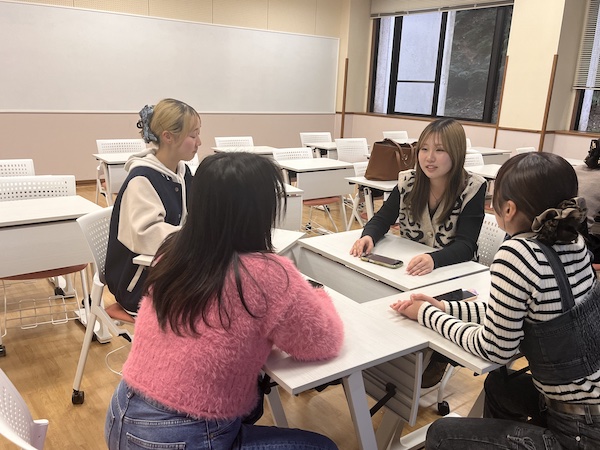
Students in a small group discussion
We study things such as loanwords (外来語) — where do the loanwords in Japanese come from? Why do we use them? Do other countries use loanwords?(外来語を取り上げた授業では、日本における外来語の由来や必要性、他国の例などについて考えました。)
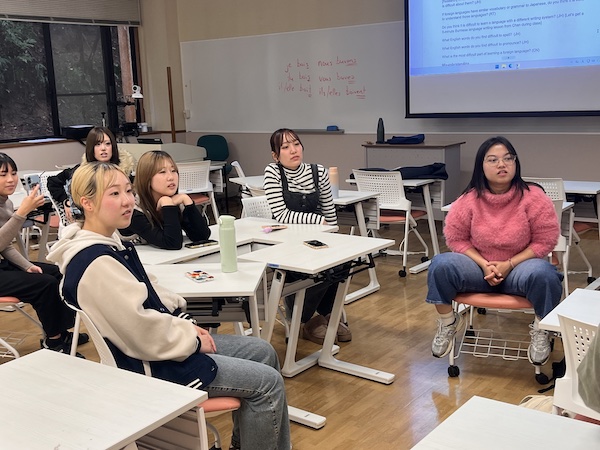
Finding out new surprising things about language
We also study naming conventions (Should we use Otagawa, Ota River, River Ota, or Otagawa River?) and discover that so many places are named with indigenous languages (Mississippi, Sapporo, Rotorua) or with names from colonists (New Amsterdam became New York).(地名や地理に関することばにも注目しました。背景にある慣習や各地の先住民の文化との関係についても学びました。)
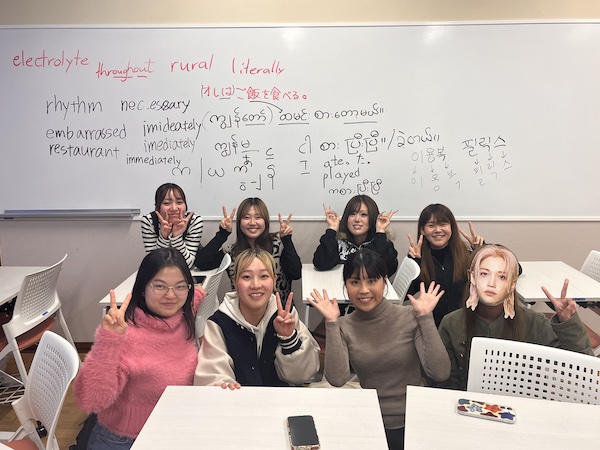
C (front row, left edge) gave us a Burmese language lesson — it helped us understand the complex nature of language
We study about English language education, foreign language learning difficulties, and multilingualism — we even use our international students to teach us some of their language(s) — in the case above, Burmese.(英語教育や外国語を学ぶ難しさ、多言語主義について学んだときには、留学生が自国の言語をクラスメイトに教えるということを通して、学生自身が実際に体感しながら考えを深めました。)
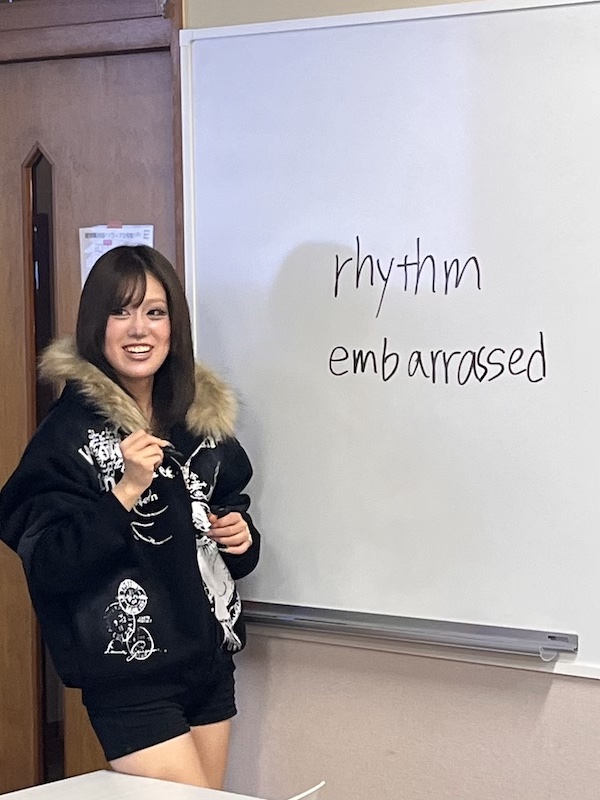
MK shares some of the spelling difficulties in English with the class
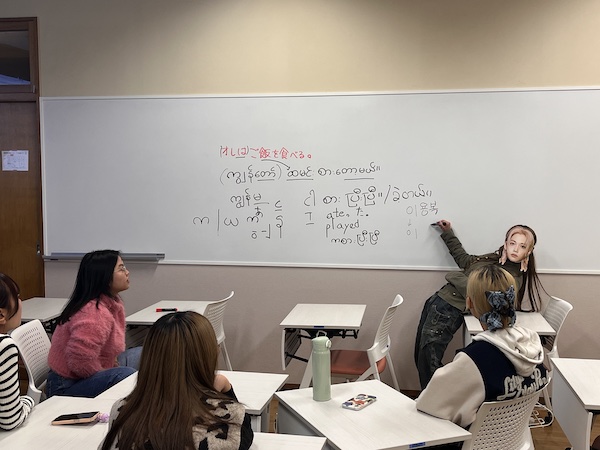
Felix from Stray Kids (KN) shows us some similarities between Korean and Burmese on Halloween (thus the mask)!
In the second half of the course, students will discover more and more about language — how language affects culture, and vice versa; why translation is not always so easy; how non-verbal communication is really important; how real life language is different from textbooks; and also how language can be fun and creative, and therefore an essential part of our lives.(これからの学期後半の授業では、ことばと文化の相互関係について取り上げます。翻訳、非言語コミュニケーション、日常で使うことばと教科書のことばの違い、ことばの面白さと創造性など、学びが広がります。)
As a teacher, I have loved the first half of this course with students who are very active, full of ideas, and more than willing to share those ideas with everyone. For the students, this increased awareness will help them during the rest of their university study, in their future work, and in life in general.(学生たちは、積極的にアイデアを共有し合って学びを深めています。いろいろな気づきを持つことが、今後の大学生活や人生においてもきっと役立つはずです。)
AS says the course "allows me to gain new perspectives and answer questions about language that I hadn't considered before" — I hope that continues in the second half of our course.(ASさんが言うように、後半の授業でもこれまで意識することなかったことばの面白さについて、発見がたくさんありそうですね。)